.png)
If you run a farm or sell mowing equipment, you know how much time a good mower can save. But you may not realize that danger often hides in the phrase “I’ve done this a hundred times before.” Below are five of the most common – and most underestimated – safety mistakes when using a lawn mower. From flying debris to tip‑over accidents, every point is worth your full attention.
Myth #1: Mowing without clearing the area first
Many operators are in a hurry – start the engine, engage the blades, and off they go. But have you ever thought about what’s hiding in that grass? Stones, branches, wire, even forgotten tools. Under a high‑speed blade, these objects turn into dangerous projectiles.
Real consequences: A pebble the size of your fingertip can be thrown dozens of meters – breaking a window, injuring a bystander, or even hitting the operator. Every year there are reports of eye injuries, facial cuts, and broken bones caused by flying debris.
What to do instead: Spend just three minutes walking the area before you mow. Pick up obvious obstacles, especially near roadsides, corners, and tree roots. Do it for yourself and for others.
Myth #2: “I’ll mow across the slope – it’s easier than going up and down”
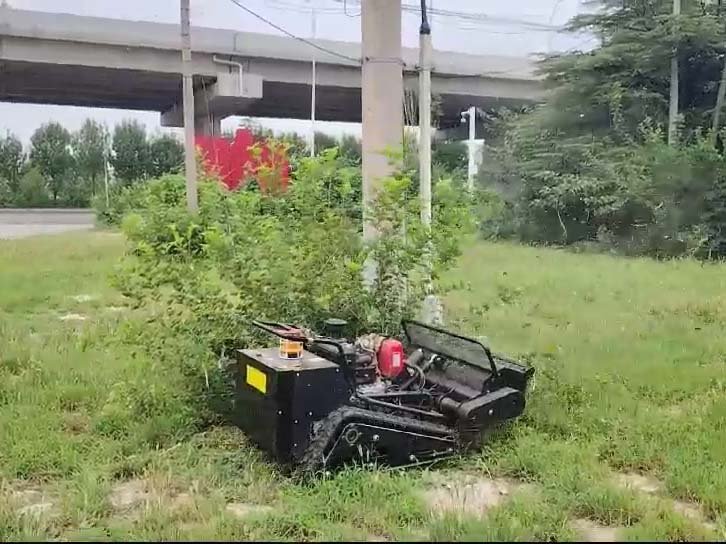
Some experienced operators feel that mowing across a slope is more stable and less tiring. Actually, that’s the fastest way to tip a mower over. Mowers have a high center of gravity. When you drive sideways on a slope, a single bump, hole, or patch of wet grass can send the machine rolling over – and you have almost no time to react.
Real consequences: Slope rollovers are a leading cause of serious injury and death from mowing accidents. The operator can be pinned under the mower or pulled into the blades. The outcome is often devastating.
What to do instead: Go up and down, not across. If the slope is steeper than about 15 degrees (roughly like a household staircase), switch to a slope‑specific mower or a hand‑held trimmer. Don’t risk your life for “just this one time.”
Myth #3: Reaching into the chute without shutting off the engine
Grass clogs the deck – you hear the blades struggling. Many people think, “Shutting off the engine is too much trouble. I’ll just use a stick or put on a glove and pull the grass out.” That is extremely dangerous.
Real consequences: Even if the blades look like they’ve stopped, the engine may still be idling. The centrifugal clutch can suddenly engage, and the blades will start spinning again. Fingers, gloves, sleeves – they get caught in an instant. Broken fingers, amputations, and worse.
What to do instead: Always turn off the engine! Pull the spark plug cap or the key. Wait for the blades to stop completely, then use a tool to clear the clog. Never use your hands, never wear gloves for this job, and never rush.
Myth #4: Wearing flip‑flops, sandals, or going barefoot
Summer heat makes you want to kick off your shoes. It’s comfortable, but it might be the most underestimated risk of all.
Real consequences: The ground is slippery. Your foot can slide into the blade area. Or flying stones and sticks can smash directly onto your bare toes. Every summer, emergency rooms see dozens of “lawn mower foot injuries” – many of them caused by improper footwear.
What to do instead: Wear steel‑toe work boots or high‑top non‑slip shoes. Long pants, safety glasses, and ear protection are also highly recommended. Don’t let a pair of sandals ruin your summer.
Myth #5: Mowing wet grass or working in the rain
Many farmers think, “Right after a rain, the grass is wet – but it’s a good time to mow because there’s no dust.” Actually, wet grass is dangerous for both you and the machine.
Real consequences: Wet grass clogs the discharge chute easily, which means more frequent cleaning (and more engine stops). Wet ground drastically reduces tire grip, especially on slopes – you can lose control in seconds. For electric mowers, rain can cause electrical shorts or even shock hazards.
What to do instead: Wait until the grass surface is completely dry. If you absolutely must mow in damp conditions, use a machine with high water resistance, reduce your speed, and avoid sharp turns.
A few honest words to finish
A lawn mower isn’t a monster. But it is a high‑speed machine with very sharp blades. As an exporter supplying mowers to dozens of countries, we worry less about mechanical failures and more about habits – the “I’ve always done it this way” mindset that leads to accidents.
Please share this article with your customers, your workers, and anyone who uses a mower. Behind every safety myth, there is a preventable injury.
Mow safe. Start by changing just one “no‑big‑deal” habit.
-300x76.png)