.png)
For dealers and farmers around the world, a lawn mower isn’t just a piece of equipment – it’s a long‑term investment. Whether you’re maintaining golf courses, managing pastures, or taking on municipal landscaping projects, reliable mowers are essential tools. And buying in bulk is the key to making that investment more cost‑effective and your operation more efficient.
How much can you really save with bulk buying?
Many dealers ask: “If I take dozens or even hundreds of mowers at once, does it really pay off?” The answer is yes.
First, the unit cost drops significantly. As an export factory, our bulk prices are typically 15–30% lower than retail. Those savings either go straight to your bottom line or let you offer better prices to your customers – thinner margins but higher volume, and your customers will stick with you.
Second, shipping costs per unit are much lower. Fill a full container, split the freight by the number of machines, and you’ll save a large chunk compared to small top‑up orders. And when ocean freight rates are volatile, ordering enough stock for half a year locks in your logistics costs.
Finally, avoid “out‑of‑stock anxiety.” Nothing hurts a farmer more than a machine breaking down in peak season with no replacement on hand. When you keep inventory, you can respond immediately – and that builds your local reputation.
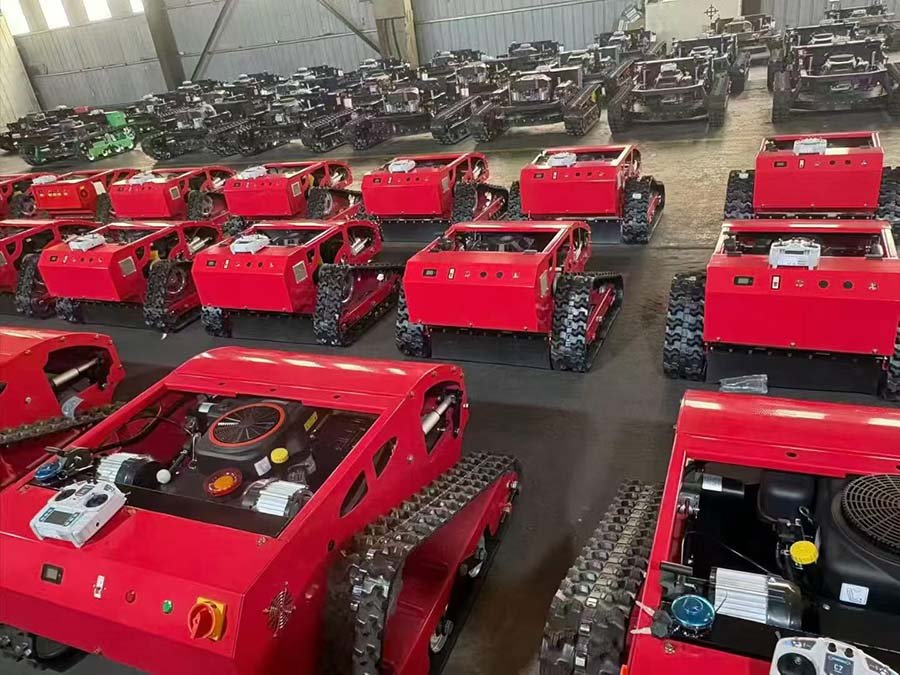
Inventory strategy: Don’t let your stock gather dust
Bulk buying saves money, but poor inventory management can quickly eat those savings. Here are some practical tips:
- “Hero model + proven bestseller” mix
Don’t take every model. Study your local market: flat lawns prefer push mowers, hilly areas need self‑propelled units, large farms want ride‑on mowers. Put 80% of your budget into 2–3 hot models, and use the remaining 20% to test new ones – if they don’t sell, your risk is limited.
- Get your stock 60 days before peak season
Mowers are seasonal. In North America, the season kicks off from March to May; in Europe, it peaks from April to June. Factor in customs clearance and inland transport – you should place your order two months before the season starts. By the time customers are urgently looking, your mowers are already in your warehouse. And when demand is high, you set the price.
- Order spare parts together with machines
Smart dealers order blades, belts, and spark plugs equal to 10‑15% of the number of mowers. A customer’s machine breaks down – you replace the part on the same day. He’ll come back to you for his next mower, guaranteed. That small parts inventory is the cheapest way to keep customers loyal.
How we build dealer trust: Our commitments as an exporter
As an export manufacturer, we know dealers worry most about three things: inconsistent quality, poor after‑sales support, and out‑of‑stock during peak season. So for bulk buyers, we offer three real guarantees:
- Consistent quality – Every batch comes off the same production line, checked to the same standards. The 100 mowers you receive are identical to the sample you tested.
- Backup inventory support – We keep a limited stock of mowers and common parts in our overseas warehouse. If you miss an order or get an unexpected big deal, we can ship a replenishment within 48 hours – so you never lose a customer.
- Slow‑moving model exchange – We’ll agree on a trial sales policy before you place your order. If a particular model doesn’t move within three months, you can exchange it for equal value. Many factories won’t do this, but we put it in writing.
Three practical tips for farmers and dealers
- Group buying – If you’re a small dealer, team up with other local dealers to fill a full container. Split the goods among yourselves, and everyone gets wholesale prices.
- Trade‑in programs – Encourage farmers to trade in old machines as partial payment. You can refurbish and sell them to budget‑conscious users, or strip them for parts – multiple wins from one machine.
- Watch exchange rates – RMB or USD? Lock in your rate early to avoid losing money when settling.
A final, honest word
We’ve been exporting mowers for over 15 years. We’ve seen dealers lose peak season because they were afraid to hold inventory – and we’ve seen smart dealers use one or two containers of stock to grow from a mom‑and‑pop shop to a regional distributor in three years.
Bulk buying isn’t gambling – it’s simple math. Add up the lower unit cost, shared freight, and peak‑season premium, then combine it with a flexible inventory strategy. You’ll find that a few extra machines in your warehouse aren’t a burden – they’re the strongest confidence you can have in your local market.
-300x76.png)