.png)
If you export lawn mowers to agents and farmers around the world, your customers don’t care about fancy presentations. They care about one thing: a machine that works, at a fair price, delivered on time.
And it all starts with choosing the right OEM/ODM supplier. Pick well, and you build a smooth business. Pick poorly, and you’ll drown in after‑sales problems, lost customers, and a damaged brand.
So let’s get practical. As a purchasing manager, how do you evaluate a lawn mower factory to see if it’s worth a long‑term partnership?
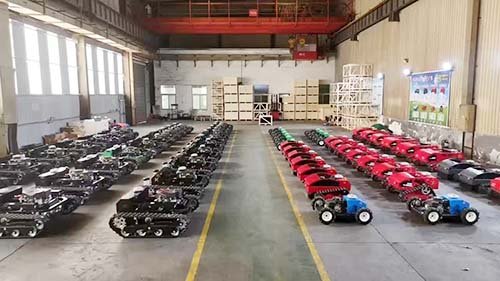
Step 1: Don’t just look at the sample – look at batch consistency
Too many buyers have fallen into this trap: the sample is perfect – great workmanship, solid performance. But when mass production starts, problems pop up everywhere – loose screws, unbalanced blades, stiff starter cords.
Practical tip: Ask to tour the production line. Focus on three things – whether there are standardised work instructions on the assembly line, whether quality checks are placed at key control points, and whether finished products go through full inspection or random sampling. Also, ask to randomly inspect already packed but not yet shipped units – they tell you more than a sample prepared especially for you.
Step 2: Check their R&D capability – especially for modifications and customisation
Agents and farmers have all kinds of requests: add a mulching function, adjust the handle height for different users, change the colour and logo on the same plastic shell.
If your supplier doesn’t have its own in‑house tooling engineers and mechanical designers, every small change has to be outsourced – long lead times, high costs, endless back‑and‑forth.
Practical tip: Ask three questions – How many mechanical engineers do you have? How many days does it usually take to modify a plastic injection mould? Can you give me an example of a customisation you completed for another customer in the past six months?
Step 3: Certifications and compliance – your passport to export
For the EU, lawn mowers need CE, noise directive, and EMC certification. For North America – UL or ETL, plus EPA emissions. For Australia – RCM. Each market is different, but the bottom line is the same: your supplier must have proven experience with the major markets, and their certificates must be valid and verifiable.
Practical tip: Ask for scanned copies of their certificates, then check them on the issuing body’s website. Also ask: were the certifications done in the factory’s own name, or borrowed from another company? If it’s the latter, you’ll likely have to pay for your own testing – not cheap.
Step 4: Lead time and production capacity – no breakdowns in peak season
Lawn mowers are highly seasonal – most shipments go out before spring. If your supplier has limited capacity, they won’t be able to fit your orders in during peak season, or worse, they’ll rush production and sacrifice quality. Either way, you lose.
Practical tip: Ask to see their shipping records from the past year. Understand their maximum monthly capacity versus actual average monthly output. Also ask: do you allow on‑site order follow‑up during peak season? What is your penalty clause for delays?
Step 5: After‑sales support and cooperation attitude – it’s about “what happens when things go wrong”
Even the best factory can have problems. What matters is how they react: do they make excuses, or do they step up and solve it? For export business, overseas after‑sales costs are extremely high, so quality control on the front end and a fast response mechanism on the back end are equally important.
Practical tip: During negotiation, run a small “stress test” – ask, “Suppose a batch arrives at the destination port and a quality issue is found. How would you take responsibility?” Would they send replacement parts free of charge? Would they share the claim cost? Their reaction tells you a lot about whether they truly want a long‑term partnership.
Final word: Build your own supplier scorecard
Take the five steps above and turn them into a simple scorecard. Set 5–10 specific indicators for each step, and score every supplier you visit. Don’t rely on gut feeling or relationships alone.
Exporting lawn mowers is ultimately about stability – stable quality, stable delivery, stable cooperation. When you find a truly reliable OEM/ODM partner, your customers will trust you, and your brand will take root in overseas markets one step at a time.
If you’re currently looking for a lawn mower OEM/ODM supplier, take this handbook and use it on your next factory visit. Good factories are never afraid of being checked – the ones that are afraid are not worth working with.
-300x76.png)