.png)
“Clogged again!” – that’s a frustrating shout many farm owners and operators know too well during the rainy season or when cutting tall grass. Once the discharge chute plugs up, grass can’t exit the deck. The mower instantly loses cutting ability, the engine sounds strained, and it might even stall. Worse, repeated clogs waste time, can slip the belt, jam the blade spindle, or even burn out the drive system. Today we’ll talk about why the discharge chute clogs so often, and how to clear it quickly and effectively when it does.
First: where does the clog actually happen?
The discharge chute of a mower is the path from inside the deck to the discharge opening (side discharge, rear discharge, or bagging adapter). Wet grass, long grass, or too many clippings accumulate there and form a “grass plug”. A light clog reduces discharge – grass trickles out and doesn’t throw far. A heavy clog stops discharge completely. Grass piles up inside the deck, and engine load soars.
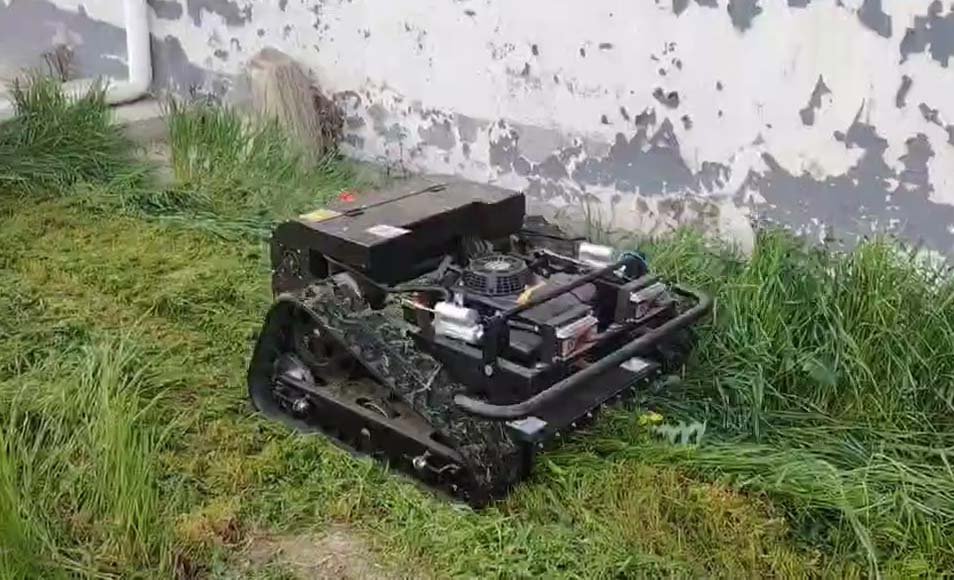
Six common causes
- Grass is too wet
This is the number one culprit. Morning dew, cutting right after rain, or mowing too soon after irrigation – the grass surface is wet, sticky, and easily pastes itself to the inside of the chute. Layer after layer, it quickly blocks the passage.
How to tell: The clog is dark green, soggy, and you can squeeze water out. That’s wet‑grass clogging.
- Grass is too tall
Many users put off mowing until the grass is 40‑50 cm tall and then try to cut it down to normal height in one pass. The volume of clippings is huge, and the chute can’t expel them fast enough – they just jam together. Tall, fibrous grass or vines are especially bad because they are tough and tend to wrap around things.
- Worn or wrong blade type
The blade creates the air flow that throws grass out. If the blade is dull, bent, or you’ve swapped in a mismatched “fuel‑saving” blade with insufficient upward lift, there won’t be enough air movement to eject the grass. Clippings just spin around inside the deck and eventually clog.
Typical sign: Clippings are chewed into a mushy paste rather than being thrown out as small pieces.
- Engine speed too low
Some operators run the engine at less than full throttle to save fuel or reduce noise. But the discharge chute is designed for the rated speed (usually around 3600 rpm). At lower rpm, blade tip speed and throwing air flow drop significantly. Grass can’t get out – so it clogs.
- Rusty or rough inner surface of the chute
On older mowers, the coating inside the discharge chute may have peeled off, leaving rough, rusty metal. Wet grass sticks much more easily to a rough surface. Over time, a hard layer of dry grass builds up, making the passage even narrower.
- Poor mowing pattern or speed
For example, always mowing in the same direction so that clippings pile up on one side. Or driving too fast – the amount of grass entering the deck per second exceeds what the chute can handle. In thick grass, fast forward speed is almost guaranteed to cause a clog.
Quick ways to clear a clog (safety first!)
Important warning: Before you try to clear a clog, shut off the engine, remove the spark plug cap or key, and make sure the blades have stopped completely. NEVER reach into the chute while the engine is running.
Method 1: Reverse clearing (most common)
Get a smooth wooden stick or plastic pipe about 2‑3 cm in diameter and 60‑80 cm long (no metal – you don’t want to damage the blade). From the discharge opening, start pulling grass out. At the same time, from under the deck (remove a baffle or work through the blade gap), use another small stick to push the clog forward. Working from both sides, break up and pull out the wet grass mass. Most clogs can be cleared in under 5 minutes.
Method 2: Pressure washer blast
If the clog is packed tight and partly dried, a wooden stick may not work. Use a pressure washer from the discharge opening, set to a straight stream. Keep pressure moderate (avoid forcing water into bearings). The water jet will break the clog apart and wash it out. Afterwards, drain and dry the deck thoroughly.
Method 3: Remove the chute cover for a full clean
For older machines that clog repeatedly, the most thorough fix is to remove the discharge chute cover (usually held by 4‑6 bolts). With the cover off, you can see the whole passage. Use a scraper to remove all grass buildup and rust flakes. While you’re in there, check the blade for wear and the belt for slipping. When reassembling, make sure the seal is in place.
Method 4: Compressed air
In a farm workshop, you can use a compressed air gun from the discharge opening, blowing backward. High‑pressure air can push out looser wet grass. But for a really tight, packed plug, water or mechanical clearing works better.
Daily prevention beats ten uncloggings
- Avoid mowing sopping wet grass – if you absolutely must, raise the deck one notch and clean the mower immediately after.
- Mow often, take less height – start when grass reaches 15‑20 cm, and remove no more than one‑third of the grass height per cut.
- Keep blades sharp – check blades every 25 operating hours. Sharpen or replace when dull. Use the correct blade type for your mower.
- Run at full throttle – always mow with the engine speed set to maximum. Don’t back off to save fuel.
- Clean the chute regularly – every 10‑15 hours, scrape off built‑up grass residue from the inner walls. After cleaning, spray a light anti‑rust lubricant (like silicone spray) to reduce adhesion.
- Optimise your pattern – slow down in thick grass so you don’t overwhelm the discharge capacity. When needed, use a “half‑width overlap” pattern so that part of the deck is always on already‑cut ground, reducing the load on the chute.
Final thoughts
A clogged discharge chute may seem like a small nuisance, but it hurts both productivity and machine life. Once you identify the real cause – wet grass, tall grass, dull blades, low rpm, or a rough rusty chute – you can fix it and avoid most clogs. Remember: prevention is better than unclogging. A few extra minutes of inspection and cleaning will give you a full day of smooth mowing. Next time you face a clog, we hope these methods get you back to work quickly.
-300x76.png)