.png)
For many farmers and professional groundskeepers, mowing isn’t a “one hour and done” job. During peak season, sitting on a mower for seven or eight hours a day is normal. You probably care a lot about engine power, cutting deck width, and fuel efficiency. But there’s one issue that’s easy to overlook: how will your body hold up?
Sore wrists, stiff shoulders, back pain, or even numb fingers and shaking hands after work – these aren’t just signs of “getting older” or “lack of exercise.” They’re often caused by mowers that weren’t designed with the operator in mind. Today, let’s talk about two features that are frequently underestimated but directly determine how many years you can keep mowing comfortably: ergonomic handles and vibration reduction systems.
- Why do ordinary handles make your hands and shoulders hurt?
Many older or low‑end mowers come with a handle that’s just a steel tube – fixed angle, smooth surface, non‑adjustable height. To hold it, your wrist stays at an awkward angle. When you hit uneven ground, the vibration and torque are transferred directly to your arms and shoulders.
What happens?
- After 30 minutes, your palm starts to feel numb.
- After one hour, your forearm aches, and steering becomes harder.
- By the end of the day, your wrist hurts – and the next morning, you can barely make a fist.
This isn’t an exaggeration. Long‑term use of poorly designed handles can lead to carpal tunnel syndrome, tendonitis, and elbow joint strain. How many experienced farmers have ended up with weak hands – not because they lost strength, but because their joints were worn out by vibration.
What can an ergonomic handle do?
- Adjustable angle and height – you can find the most natural grip position for your height and whether you’re standing or sitting. No more twisted wrists.
- Soft, non‑slip rubber grip – better friction, so you don’t have to squeeze hard; it also absorbs some vibration.
- Proper grip width – your arms stay naturally apart, relaxing chest and shoulder muscles instead of keeping them tense.
Simply put, a good handle makes you feel like you’re guiding the machine, not fighting it. The difference is obvious.
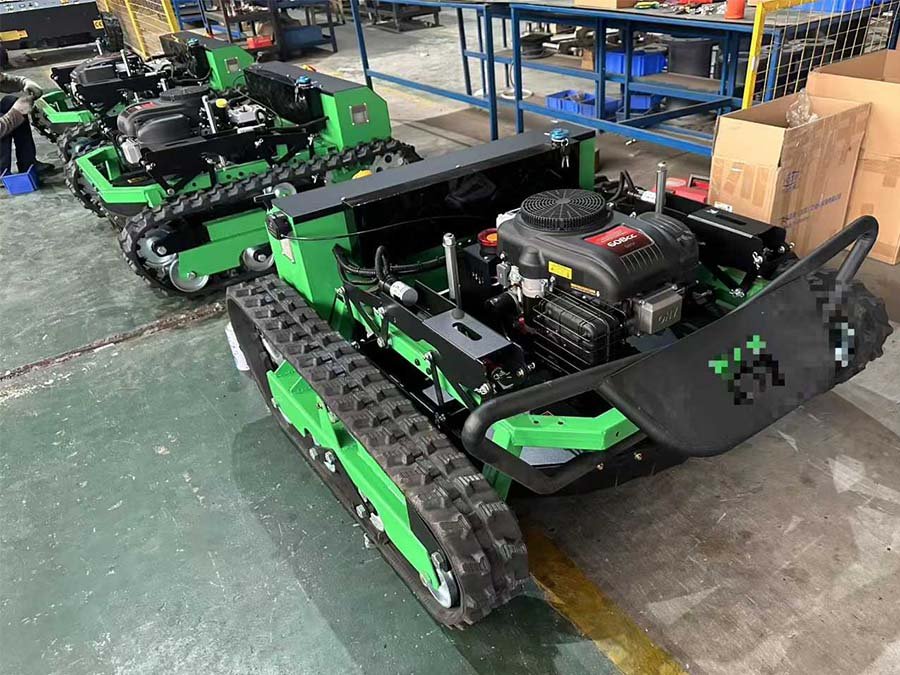
- Vibration reduction systems: protect your entire body
Vibration on a mower comes mainly from two sources: the engine itself, and the impact of blades cutting grass and small debris at high speed. That vibration travels through the frame, seat, and handle – right into your body.
For a short time, you just feel “a little numbness.” But over long hours and repeated exposure, it can cause a recognized occupational disease – hand‑arm vibration syndrome (HAVS). Symptoms include: fingers turning white, loss of feeling, reduced grip strength, and joint pain that wakes you up at night. Severe cases are irreversible.
Whole‑body vibration also speeds up lumbar disc degeneration. When old‑timer mower operators complain about bad backs, it’s not always posture – sometimes it’s from being “shaken to pieces” day after day.
How does a good vibration reduction system work?
- Handle vibration damping – rubber mounts or spring dampers between the handle and the frame can reduce transmitted vibration by more than 50%.
- Seat suspension (for ride‑on mowers) – independent damping springs or air‑suspension seats, like those in trucks. When you roll over bumpy ground, your spine doesn’t take the beating.
- Engine and deck isolation – flexible mounts that reduce vibration transfer to the operator zone.
You don’t need to remember all the technical terms. Just remember one thing: On a mower with no vibration damping, after three hours you feel like you’ve been in a fight. On a mower with good damping, after five hours you can still carry a case of beer.
- What does this mean for dealers and farmers?
If you are a farmer buying a mower for yourself or your workers:
Don’t just look at the price tag. Do the math: a mower with ergonomic handles and vibration reduction may cost 15–20% more. But if it lets you or your crew work three more years without repetitive‑stress injuries, take fewer sick days, and be more productive, that extra cost pays for itself in no time. Plus, workers simply prefer comfortable machines – nobody wants to suffer every day.
If you are a dealer recommending mowers to customers:
Make “comfort and safety features” a selling point. Many customers don’t know these options exist – they just haven’t been told. When you say, “With this machine, your hands won’t go numb and your back won’t ache after a full day’s work,” that often resonates more than “more horsepower.” Especially in markets with an aging farming population, older operators care a lot about comfort and long‑term health.
- Bottom line: don’t let your body take the beating
A lawn mower is meant to make work easier – not turn into a tool that hurts you. Ergonomic handles and vibration reduction systems are not luxury gimmicks. They are basic features that any modern mower should have.
Next time you choose a mower or recommend one to a customer, ask one simple question: “Can the handle be adjusted? How much vibration does it have?” That question can decide whether someone will still be able to do this job comfortably in the years ahead.
Your body deserves better design.
(If you have questions about specific configurations or vibration reduction technology, feel free to leave a comment or contact our technical team. We’ve been exporting mowers for over a decade, and nothing makes us happier than talking about how to make machines easier on the people who use them.)
-300x76.png)